Tuesday, 15 November 2011

Homeschooling Overseas Part 2

It’s high time to continue with my series of posts on homeschooling. In this post I’d like to talk about our journey to becoming a homeschooling family. In the last post I highlighted some of the options that might be available if you’re living overseas. For us we only have two options here: either sending the children to local school or homeschooling ourselves. I’m not saying that one is better than the other. There are some ex-pat families here who send their kids to local school, and some who homeschool. It’s a decision that each individual family has to make. I’m just describing how we decided that homeschooling would be best for our family.

Our journey started when we came across some friends in England who had decided to homeschool. Both were Christian families, and both had different reasons for chosing that path, but I was interested to know how they were thinking about going about it. They recommended reading “For the Children’s Sake” by Susan Schaeffer Macaulay, which is I think where the journey starts for many families homeschooling today! Both my husband and I read the book, and were really struck by the ideals represented there. Not only did we feel that homeschooling might be something positive and beneficial for our family, but we were also impressed by the educational methods of Charlotte Mason described in the book. As many of you probably know, Charlotte Mason was a British educator who lived about 100 years ago and developed a philosophy of education based on Biblical principles and her observations of children over her years of teaching and training new teachers.

I started reading more books and doing more research, mostly on the internet. The more I read and studied the more I felt that God was calling me to do this. The thought of homeschooling didn’t terrify me, like I know it does some people, partly because I am a teacher myself by profession….a maths teacher, to be precise, which seems to be the one subject that scares off potential homeschooling mothers the most! I had a bad experience in my former life as a teacher, which put me off teaching in mainstream schools and led to my change of career that eventually brought me here, but I had always loved the heart of teaching: imparting ideas and knowledge to children and the satisfaction that comes from seeing ‘light bulbs’ go off in their heads as they make connections and finally ‘get it’. Surely it couldn’t be too difficult teaching my own children! At least I would only have a class of 3 rather than 36 to manage!

We did investigate the local kindergarten. The main advantage of sending our children to local school would certainly have been the fact that they would become fluent in Russian much more easily and quickly. We liked the school very much. The teachers were ever so friendly. We expressed concern at the long day (in Russia children typically go to kindergarten from 8am to 4 or 5pm, having breakfast, lunch, afternoon nap and sometimes dinner there from as young as 2 years old) but they assured us that it would be fine if we wanted to take Sophie home at midday. They invited us to the ‘end of year performance’ which was an afternoon of dancing, singing and poetry recital by the children to wish the 6-7 year olds well as they went off to ‘proper’ school in September (Russian children start school at age 7). We were very impressed by the seriousness with which these small children undertook the dances, and at the bravery of even quite little ones taking the microphone and reciting a poem off by heart to a fairly large audience of parents and relatives. However, I remember my main thought being “Look at those outfits the little girls are wearing. We could never afford to deck Sophie and Charis out in one of those at the end of each year!”. Indeed, these little 6 and 7 year olds looked more ‘done up’ than I did on my wedding day! Their gowns must have cost a fortune, and it looked like they’d spent at least 2 hours in hair and makeup that morning.

I think it was the dresses that swung it for me, but there were other reasons too. In this culture there are a huge amount of hidden costs behind seeing your child through school education. Teachers get paid very little and so unfortunately it's quite normal to give 'extra monetary gifts' to ensure good marks.There’s also all the paperwork and red tape that would be involved, partly because we’re foreigners but also partly because that’s the system here, and I really hate that kind of thing. Finally, Sophie’s personality is such that we didn’t think she’d do well being thrust into that kind of environment at a young age.

And so, to cut a long story…well…not very short, we started planning on homeschooling. To be honest, the more we thought about it the more we thought that this is a route we may well have taken if we’d back in England. It just seemed to fit what God had in mind for our family.

In my next post I’ll talk about how to respond to local friends and neighbours when they ask why we choose to homeschool.

Qu: If you homeschool, what was it that led you to that decision? I'd love to hear your stories.

Abide in Him!

Wednesday, 9 November 2011

Outdoor Hour Challenge No. 11 - Tree Study

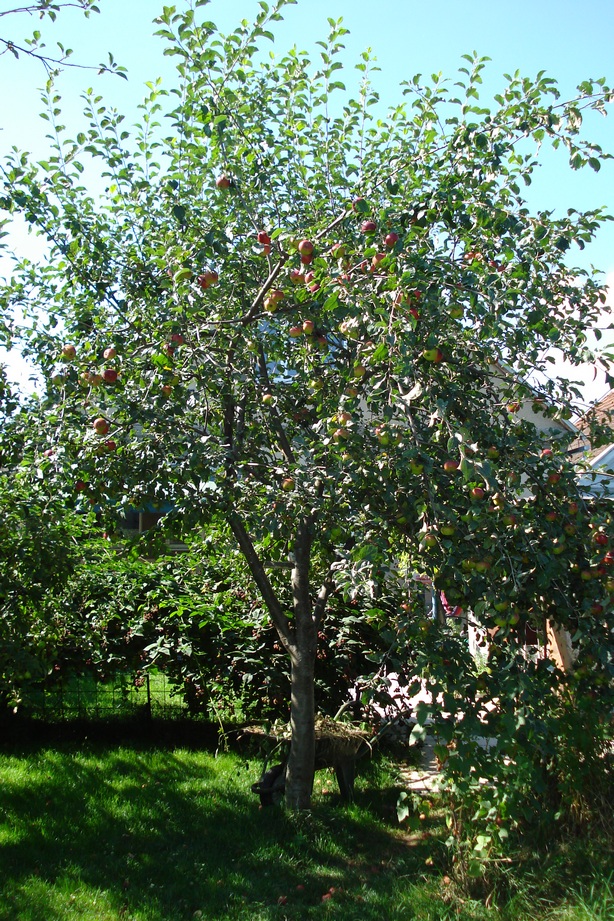
I'm actually writing this entry having come to the end of our year long tree study project. We chose trees as our family focus last year when we started doing these Outdoor Hour Challenge and followed eight trees, two in our garden and six in our town park. I think, however, that I was a bit more interested in doing the study than the girls were, but I'm hoping they'll be interested when I put all the photos together and they can see how the trees have changed in the photos.

Here are some pictures of the apple tree in our garden, which was our particular focus back in this post.


May
June

August


November
December
January

Outdoor Hour Challenge No. 10 - Picnics

This challenge is about picnics. Maybe it's something about being British, but I've always loved picnics, whatever the weather. I remember when we first moved to our town here in Russia, a local couple took us up into the foothills of the moutains for a picnic, which involved making a fire from scratch and cutting up our own cucumbers and tomatoes there on the grass. It started to rain. "Oh, we're so sorry about this," they said. "Don't worry," we smiled, "We're British. A picnic wouldn't be a picnic without the rain!".

Anyway, for this challenge I wanted to write about two picnics we've recently taken(although perhaps not quite so recently since it's taken me a long time to get round to writing this post!). When dh's parents were here for a visit we took them to our favourite picnic spot up in the foothills (actually, that very same spot where we were taken in the rain 9 years ago). I like to do picnics English-style, i.e. have things already cut up and made beforehand. Dh prefers picnics Russian-style, where you bring everything along and cut it up and make it there and then. For a compromise I cut up the cheese and veggies at home but bring the breadboard and breadknife to make the sandwiches later. One of the things I enjoy about picnics is that the children can run around us while we stay in one spot, instead of, say, going on a walk, where I'm usually dragging one or more of them along by the end because they got 'too tired' at quite a distance from where I parked the car. Russians never picnic too far away from their car (for fear of it being stripped for parts if it's out of sight), which even means them driving over rough terrain to get as close as possible to the picnic site.

Our kids really enjoy picnics up here in the foothills. Perhaps because it's something different. Perhaps because they get to eat loads of crisps (potato chips) without me batting too much of an eyelid. But they particularly enjoy the clambering about on the rocks afterwards looking for interesting clumps of flowers or following the horses that are grazing in the area.


Looking at mountain flowers


     We nearly always find beautiful mountain flowers that I can't identify in my 'Europe' wild flower guide.


The second picnic we took in the extensive town park where we live. The kids enjoyed playing hide and seek behind the trees and running down the little slopes of grass together. On the path on the way back Sophie and Charis discovered hundreds of little striped snails on the gravel path near the man-made lake. We tried to identify which shells no longer had owners and took them home to join our nature collection box on our school-room table. The girls noticed that these snail shells were very different to to the small black snails we tend to find in our garden. This interest led to a quick looking up of some information about snails in the Handbook of Nature Study and on the internet.
Snails from the picnic spot
Small black snails from our front yard

Tuesday, 20 September 2011

Outdoor Hour Challenge No. 9

Outdoor Hour Challenge No. 9 involved marking off a square of ground in our back garden with some string and encouraging the children to look as closely as they could to see what they could see in their square. I had a notebook with me to jot down things they found. I also gave them some small trowels and forks to dig a little deeper under the grass, as well as their magnifying glasses.


“Children should be encouraged to quietly and patiently watch the bee, spider, ant, caterpillar or other wildlife that crosses their path. If this seems dull to them, they just need to watch more closely, because their alert eyes can catch the smallest ways of insects in ways that grown-ups can’t without magnifiers.” Charlotte Mason, volume 1, Outdoor Life, page 57 

 Charis started off by putting down her string square and filling it with things she found in the garden, like an apple, a blackberry.. I had to explain that you had to see what was already there and not add new stuff! After noting down things like grass, brown leaves from the apple tree, moss, dirt......Sophie suddenly found a tiny, dark brown snail, which she had a look at with her magnifying glass. She was surprised that the snail didn't seem at all 'shy' and happily crawled up her hand. We also found some clover and the stem from an apple. Unfortunately there weren't any other bugs or interesting things, although probably if we'd dug deeper (we didn't want to mess up the lawn) we would have found a worm or two.

Here's Sophie's nature study entry, again it's a bit faint, sorry!.

Saturday, 17 September 2011

Outdoor Hour Challenge No. 8

As we start off the new school year (OK, actually we started three weeks ago) I'm planning to continue with the outdoor hour challenges as found on the Handbook of Nature Study blog. So far we're up to challenge number 8, which is all about using magnifying lenses and microscopes.

“In elementary grades, nature study deals with objects which the children can see with the naked eye. However, a lens is a help in almost all of this work because it is such a joy to the child to gaze at the wonders it reveals.” Handbook of Nature Study page 9.

So, armed with their magnifying glasses, Sophie and Charis marched off into our garden with instructions to find something interesting to look at. It took a while to show them the proper distance you should hold between your eye and the glass and the object and the glass to see it at its best. Charis (4) lost interest fairly quickly, but Sophie (6) kept going a bit longer because I'd asked her to sketch a few things in her nature notebook.


 Sorry it's a bit faint, but you might be able to make out a dahlia flower, an empty spider's web amongst the ivy leaves and a spider in the grass.

The girls wanted to take their magnifying glasses along on our next walk around the village, although they didn't actually use them in the end, so I'm hoping that this is something that will grow on them. I'll keep the glasses in our nature study bag so they're always available. We do also have a little bug jar, which has a magnifying lens attached, but it's not very clear, especially by the time the girls have added grass, leaves and water to keep the bug happy!

Thursday, 1 September 2011

Homeschooling Overseas Part 1


I’ve just started ‘proper’ homeschool with my eldest dd, Sophie, this September. I’m so excited about it, partly because I’ve spent so many years researching and preparing for this moment that it’s a relief to finally be able to start!

In this next series of posts I’d like to talk about how we as a family ended up deciding to homeschool, what the options are available for those of us living overseas, and how we might respond to locals, as well as friends and family back home, when they ask, usually with a certain degree of incredulation, the question ‘Why do you homeschool your children?’.

This first post will look at some of the schooling options available to those of us living overseas, and some of the pros and cons of each, at least how we see it.

1)      International English-speaking school

If you live in a capital city, or a fairly large, main city in the country in which you’re currently based, you may have such a school near by. Often such schools are also Christian-based or sponsored by various ‘M’ organisations. The advantages of such a school are clear: lessons in English, Christian teachers and perhaps Christian curriculum, cementing friendships with other ex-pats and ‘Third Culture Kids’, who understand your child better than local children ever will. Certain drawbacks, however, include: teachers may be short-termers and sometimes positions are left unfilled, the curriculum may be American, and faimilies from countries such as Britain and Australia may find a few differences they might like to keep abreast of in order to help their children better integrate into the school system back home eventually. Also, children will have less exposure to local language and culture, which may or may not be a problem depending on the parents’ wishes and values, and ex-pat families tend to ‘come and go’ more frequently, forcing your child to get used to saying ‘goodbye’ to close friends fairly regularly.

2)      Boarding school in home country or some distance away from the town in which you’re currently living

Such schools will obviously give your children a good education, and will usually help the transition to school/college or university in your home country be much easier. However, having your children so far away from you is certainly a drastic step to take, and the family must decide what is in the best interest of the child and at what age such a step would have the least negative impact.

3)      Local school, in local language

In many ways this is an ‘easy’ option. It’s a great way for the child to become fluent in the local language and to feel at home in the local culture, developing strong local friendships, that are more stable than ex-pat friendships. Things that need to be considered, though, are the quality of education they might be receiving and the kinds of values that might be being taught, that may be very different from your own family values. Also, you will most likely have to supplement their education with English (or whatever is your home language) and perhaps some extra history / geography etc from your home country, in order to keep your child up to date with what they would be learning if you were back home. Many countries, though, have shorter school days and longer summer holidays, making it easier to fit in these extra studies.


4)      Homeschooling co-op with other ex-pat families

If you’re fortunate enough to live in a town where there are several other ex-pat families with children a similar age to yours who are also committed to homeschooling, then this could work really well. Adjustments will have to be made to the different ages and backgrounds of the children, and parents will have to decide who will teach which subject and agree on which books and overall curriculum to use. The logistics will be more complicated than homeschooling on your own, and different families may have strong opinions about how things should be done, but it should free each parent up a bit more to focus on other ‘ministries’, and your child has the advantage of socialising regularly with friends from like-minded families. You will still need to think about how to integrate your children more in the local culture and keep up a certain level in the local language, perhaps through extra-curricula sports and other activities.


5) Homeschooling as individual family

We’ll look more at the pros and cons of this in another post, since this is the route our family decided to take, but briefly, some of the advantages include flexibility, keeping up with what your child would be learning in their home country, and having more of an influence in your child’s life, particularly when it comes to imparting family values and faith. The disadvantages are a degree of isolation, fewer opportunities to become fluent in the local language, and of course a lot of work on the part of the parents, who will need to research, plan and implement their child’s education.

In the next post on this topic I’ll share how we came to the decision to go down this last route.

Are you overseas? If so, which of these options have your family gone for? Or perhaps have you taken another option that I haven’t mentioned here? I’d love to hear from you.

Linking up here:
Back to school photo credit: freedigitalphotos.net/photostock

Girl at school photo credit: freedigitalphotos.net/koratmember

Tuesday, 30 August 2011

Cultivating Thankfulness

When I came home from hospital I was under doctor's orders to take it easy and rest, so I finally got round to ordering some of the books I've been considering buying on my Kindle. One of them was the highly recommended "One Thousand Gifts - A Dare To Live Fully Right Where You Are" by Ann Voskamp. I'm so glad I did, because God really used this book to speak to me right in my situation of recovering physically and emotionally from a miscarriage and a traumatic stay in hospital. The fact that it begins by talking about the tragic and needless death of a young child (and later two small babies) of course grabbed my attention (and released a well-full of tears), so I was ready to soak up any wisdom and advice the author had to offer.

Ann's writing style is beautifully poetic and philosophical. It all starts with a dare to make a list of one thousand things to be thankful for, and through this experience Ann comes to understand that the "holy grail in the center of Christianity" is thanksgiving. Counting our blessings. Acknowledging God's grace even in seemingly dark situations. I think she may be onto something, so I also, along with many others who have read this book, started my own list of 'One Thousand Gifts'. Here are my first few entries, written in those first few days after coming home from the hospital:

1. Being alive.
2. My wonderful, caring, competent husband.
3. Three healthy, happy children.
4. Soft cushions and blankets.
5. Hot showers that wash away grime and heaviness.
6. Caring, loving friends.
7. Purple pens and new notebooks.
8. Books that encourage, entertain and inspire.
9. Time to plan and dream and hope for better.
10. Hot, tasty meals cooked by someone else.
11. Wild flowers picked by little hands to brighten my day.
12. The welcome promise of sleep at the end of a weary day.

I encourage you all to read the book, if you haven't already, and begin your own list of one thousand gifts.

Abide in Him!


Photo credit: freedigitalphotos.net/digitalart


Related Posts Plugin for WordPress, Blogger...